

Article Authored By Beckett Cantley and Geoffrey Dietrich
Since his election, there have been non-stop court battles over President Trump’s refusal to release personal financial information. Several House Committees have sought the President’s Trump's personal information on multiple different grounds, each claiming a valid legislative purpose for needing the information. President Trump argues the subpoenas do not serve a valid legislative purpose and that the House Committees are seeking this information to release to the public. The various sides have been locked in legal battles for years, with no end in sight.
While the House Committees seek President Trump's personal financial information, the District Attorney's Office of New York also seeks to subpoena the same information for a grand jury investigation into possible wrongdoing by President Trump in his business matters. Recently, the Supreme Court addressed each case in turn. The Court heard concerns ranging from the Supremacy Clause and separation of powers to whether a state may investigate a sitting President, and, if so, must the seeking party show a heightened showing of need. However, despite the recent Supreme Court decisions, further disputes involving President Trump's release of personal financial information to both the House Committees and the District Attorney's Office of New York are anticipated.
Covered in this article is the constitutional issues raised from the state grand jury subpoena of President Trump's tax return, including:
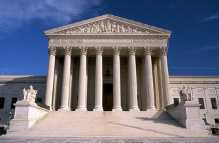
The Constitution affords Congress broad rights to use "all legislative powers",[7] but does not define its powers to investigate or perform investigations.[8] While individuals from the Founding Fathers to more recent figures have argued for more or less authority in investigations, the Supreme Court has seldom had to weigh in on this topic, doing so first in Kilbourn v. Thompson.[9] In Kilbourn, the Supreme Court addressed a contempt order issued by the House against a private citizen. While the exact facts of these cases certainly differ, the court held that "no person can be punished for [contempt] as a witness before either House, unless his testimony is required in a matter into which that House has jurisdiction to inquire, and we feel equally sure that neither of these bodies possesses the general power of making inquiry into the private affairs of the citizen." [10] It would be fifty years before the Supreme Court took up another case involving the reach and authority of congressional investigations. In McGrain v. Daugherty, the court held that the power to secure "needed information" to legislate has "long been treated as an attribute of the power to legislate." [11] The McGrain court cited cases from various State courts of appeal advising that a legislative right to investigate, though broadly construed, was "a limited power, and should be kept within its proper bounds." [12] The focus in McGrain was to emphasize investigative powers were to be confined to identifiable need to facilitate legislation¬—not to further personal ambitions, accuse or exonerate—but to further Congress' purpose of enacting legislation.
While the Supreme Court has held that the power to investigate is broad, it is not unlimited. Such power cannot be used to "inquire into private affairs unrelated to a valid legislative purpose" and does not apply where "Congress is forbidden to legislate." [13] Despite the importance of informing legislation and providing the public with information, congressional investigations have been often used to shape the political narrative. The chairman of the Senate Watergate Committee, Senator Sam Ervin (D-NC), warned against politics invading committee inquiry. He stated, investigations "can be the catalyst that spurs Congress and the public to support vital reforms in our nation's laws," but they may also "afford a platform for demagogues and the rankest partisans." [14] Juxtaposed to the prohibitions is the narrow view with which the Court would view the purported ulterior motives of Congress. In Tenney v. Brandhove, the court stated that "dishonest or vindictive motives are readily attributed to legislative conduct and as readily believed" in times of political passion, but the court should never go beyond the "narrow confines of determining that a committee's inquiry may fairly be deemed within its province." [15]
The Mazars court provided a clear statement of the history of Congress' power to subpoena individuals and information—leading specifically to the subpoena of the President.[16] Congressional subpoena power arises from the House Rules and represents "the authority granted to committees by the rules of their respective houses to issue legal orders requiring individuals to appear and testify, or to produce documents pertinent to the committee's functions, or both." [17] As recently as in the Mazars opinion, the Court recognized that Congress has no enumerated constitutional power to conduct investigations or issue subpoenas, but that each House has power 'to secure needed information' in order to legislate." [18] Further, the congressional power to subpoena encompasses inquiries into the administration of existing laws, studies of proposed laws, and surveys of our social, economic, or political system defects for the purpose of enabling the Congress to remedy them.[19] In Mazars, the Court explained that those powers to inquire do not grant a "' general' power to inquire into private affairs and compel disclosures," and "there is no congressional power to expose for the sake of exposure." [20] Any investigation "conducted solely for the personal aggrandizement of the investigators or to 'punish' those investigated are indefensible." [21] So while Congress does have a broad and indispensable power to issue subpoena for information needed to successfully effect its duties, they must demonstrate a legitimate need, a valid legislative purpose, and it must further a lawful legislative intent.
The authority is only one piece; the ability to enforce on a member of the Executive Branch has been difficult. There are three possible legal mechanisms with which Congress can, in theory, enforce its subpoena. First—and most constitutionally suspect—it can invoke the inherent power under the Constitution, deem the offender in contempt, issue arrest warrants through the sergeant-at-arms of the House, and conduct a trial. This is cumbersome, politically unpalatable, and constitutionally irregular. Second, the House can file criminal contempt charges with the local United States Attorney office that places a "duty" on the prosecutor to bring the matter to a grand jury.[22] Theoretically, this is a less volatile solution. However, as the US Attorney offices fall under the Department of Justice and, thus, under the Executive Branch, the President has the authority to command the prosecutor not to bring the case and this option dies a quick death.
The final option is for Congress to bring civil enforcement actions and file in a friendly district court to secure a ruling ordering compliance, backed by its own contempt powers.[23] Even this option has been largely eliminated in a recent D.C. Circuit opinion.[24] The McGahn court—sitting as a panel on several discrete issues after an en banc decision remanded those issues—dismissed the Congressional committee's civil enforcement suit for lack of standing.[25] The court's decision found that Congress lacked an "implied constitutional power to seek civil enforcement of its subpoenas" and thus could not identify a remedy to be found in the Judiciary.[26]
Unfortunately for our current political climate, this legal antagonism has not been the norm—else there might have been sufficient case law to resolve this. Rather, since George Washington's presidency, Congress and the President have been able to reach agreements in which the subpoena does not need to be enforced by the judicial system.[27] For example, when Congress subpoenaed President Reagan in 1982, Congress and President Reagan reached a special agreement which satisfied all parties, negating the need for the judicial system to enforce the subpoena.[28] The Mazars Court noted, "Congress and the President maintained this tradition of negotiation and compromise—without the involvement of this Court—until the present dispute." [29] However, the dispute revolving around these subpoenas has proven quite unresolvable outside of the judicial system. While cooperation may have worked in the past, the parties involved seem unable—and perhaps on both sides, unwilling—to reach an amicable, or even acceptable, resolution to the situation at hand.
The Supremacy Clause establishes the United States Constitution, federal statutes, and treaties as "the supreme law of the land." [30] It provides that these are the highest form of law in the United States legal system, and mandates that all state judges must follow federal law when a conflict arises between federal law and either a state constitution or state law of any state.
(see The Supremacy Clause, Constitutioncenter.org https://constitutioncenter.org/interactive-constitution/interpretation/article-vi/clauses/31#:~:text=This%20Constitution%2C%20and%20the%20Laws,Constitution%20or%20Laws%20of%20any)
Though historically necessary to combine a coalition of loosely affiliated States into a Nation capable of enforcing the obligations of a fledgling government, the Supremacy Clause has continued to provide guidance and judicial fruits.
Federal preemption of state law is a ubiquitous feature of the modern regulatory state and "almost certainly the most frequently used doctrine of constitutional law in practice." [31] Not to either belabor points already well known or otherwise not cover an already broad topic, we proffer simply that as a very general overview, the Supreme Court has identified two ways in which federal law can preempt state law. First, federal law can expressly preempt state law when a federal statute or regulation contains explicit preemptive language.[32] Second, federal law can impliedly preempt state law when Congress's preemptive intent is implicit in the relevant federal law's structure and purpose through its "presumption against preemption" analysis.[33]
Often cited as the basis for the separation of powers argument, under Article II, the President of the United States is beholden to the People of the United States, not its Congress.[34] Executive privilege under Article II was first claimed by Thomas Jefferson and has been a regularly utilized means of reasonably withholding information necessary to carry out the duties of the President. Although decidedly rare, Congress has issued subpoenas to sitting presidents. Significant are the outcomes and results as those inform the legal outcomes of today.
The earliest example of a subpoena issued to the President is during the 1807 treason trial of former Vice President Aaron Burr.[35] The accusation of treason centered around Burr's attempt to steal the 1804 Presidential election from Thomas Jefferson by undermining Jefferson during and after Burr's term as Jefferson's Vice President. Burr issued a subpoena duces tecum to President Thomas Jefferson aimed at gathering evidence in the form of letters to President Jefferson from General James Wilkinson. Burr claimed these letters described the events leading up to Burr's indictment for treason and were critical to his defense at his upcoming trial.[36]
The prosecution immediately objected to Burr's subpoena for President Jefferson's documents, including General Wilkinson's letters. The prosecution also cited the possibility of state secrets in the documents, as well as other general objections to a sitting President being subject to subpoena.
The Supreme Court opinion was delivered by Chief Justice John Marshall. The Court held that the President "does not 'stand exempt from the general provisions of the constitution' or, in particular, the Sixth Amendment's guarantee that those accused have compulsory process for obtaining witnesses for their defense." [37] Chief Justice Marshall further explained that the President is not above the law and was not immune from subpoena simply because it may contain sensitive information.[38]
One of the few cases to address executive privilege is United States v. Nixon, in which President Nixon argued "that the Constitution provides an absolute privilege of confidentiality to all presidential communications." [39] President Nixon had been subject to subpoena from the Special Prosecutor assigned to the Watergate Investigation centered around the 1972 burglary at the Democrat National Headquarters. President Nixon was desperately trying to avoid disclosing, among other things, extensive tape recordings of all of his Oval Office meetings.
President Nixon and members of his administration worked diligently to avoid complying with the subpoenas and continuously asserted absolute Presidential immunity and privilege despite the Court's precedent in Burr. The Court in Nixon concluded "the President's 'generalized assertion of privilege must yield to the demonstrated, specific need for evidence in a pending criminal trial."' [40] Ultimately, President Nixon was unsuccessful in all of his arguments, and eventually had no choice but to hand over the tapes in question (with the exception of eighteen missing minutes) and resign from the Presidency in August of 1974.[41]
Assertions of executive privilege have not been particularly well-received by the courts. The various assertions by the two Presidents in question here amount to a plea in equity. While the privileges accorded the Executive Branch are vital to national security, the "demonstrated" and "specific" needs for evidence in criminal trials was sufficient to override the privilege accorded our highest office. Unlike the current scenario, both of these cases tied: a) the specific and limited need demonstrated for the production of the information to, b) the pending trial of a criminal nature.
Under the circumstances of those two cases, there was a demonstrably higher need for disclosure by the President. In the instant cases discussed supra, President Trump's non-compliance with congressional subpoenas may be appropriate given the otherwise high bar set in prior cases. As an additional matter, the courts have wisely taken care in wading into these issues as both parties tend toward short-sightedness. The rationales of today become the knives-in-the-back of tomorrow with parties crying foul at tactics similarly employed.
Courts recognize the longevity of their decisions and should, rightfully, reluctantly enter into the political morass.
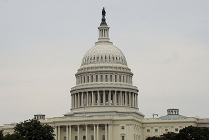
In the spring of 2019, several House Committees began to seek President Trump's personal financial information through broad Subpoenas to President Trump's various financial institutions. One such subpoena was sent to the President's third-party accounting firm, Mazars USA, LLP, and resulted in President Trump filing suit in the district court to enjoin Mazars USA, LLP from supplying the information and to quash the subpoenas. The district court granted summary judgment for the Committee, and the U.S. Court of Appeals for the D.C. Circuit affirmed, finding the Committee possesses the authority under both the House Rules and the Constitution.
In the resulting Supreme Court case, Trump v. Mazars USA, LLP,[42] the President argued the subpoenas were invalid because House did not possess a valid legislative purpose in seeking President Trump's personal information and the subpoenas were a violation of separation of powers.[43] The President argues that the Congressional subpoenas did not serve a valid legislative purpose because they were, in fact, being used as a law enforcement tool. His argument asserting a violation of the separation of powers revolves around Congress' attempt to investigate beyond the scope of their jurisdiction and constitutionally mandated authority.
The Mazars case presents an interesting dilemma on Congressional investigative powers where the President argued the only purpose of Congressional investigations into his finances was to uncover and expose wrongdoing. He further argued that those Committees' legislative aims were all law enforcement related, thus unconstitutional.
Under the constitutionally created separation of powers, law enforcement investigations are the responsibility of the Executive or Judiciary branches, not the Legislative branch.[44] In support of this position, President Trump offered Watkins v. United States.[45] In Watkins, the Supreme Court noted that Congress cannot subpoena information to expose an individual's private information for the mere benefit of exposure and expect the court to "assume . . . that every Congressional investigation is justified by a public need that overbalances any private rights affected." [46]
The President argued Congress was utilizing the subpoenas purely as a law enforcement tool, and sought to release the President's private information to the public. He pointed to the Congressional subpoena documents, themselves, as his evidence of their unconstitutional intent, stating "[t]he first request to Mazars stated that the Committee wanted to investigate the accuracy of the President's financial statements to see if he broke the law." [47]
The President's brief went on to provide several more examples from the Cohen hearings[48] of transparent Congressional attempts to use the subpoenas in a law enforcement—not legislative—context for the express purpose "to investigate whether the President may have engaged in illegal conduct before and during his tenure in office." [49] The President has underscored that this request is of a private citizen years prior to his candidacy for office.
As his final point, the President also argued that Congress had not set forth what valid legislation pertained to the President's personal information because, in fact, it could not. Any such legislation involving the personal records of private citizens would likely be unconstitutional and such a law related to sitting presidents would likely be a violation of the separation of powers, allowing Congress to exercise dominion and control over the office of the President.[50]
President Trump next asserted that a heightened standard exists when filing subpoenas seeking the President's personal information on behalf of Congress.[51] The President took the reasoning from United States v. Nixon stating "the House must establish a 'demonstrated, specific need'" and applied it as the standard to be used on the requests for his personal financial information.[52]
However, in Nixon the Court addressed the issue of Presidential communications being sought in the context of a legitimate criminal investigation.[53] The Nixon Court emphasized the importance of privacy and privilege in Executive office discussions regarding policy shaping and decision making.[54] Regarding the privilege of the office of President, the Nixon Court concluded privilege may be invoked only if compliance with a subpoena would be injurious or detrimental to the public interest.[55]
Additionally, upon receiving a claim of privilege from the Chief Executive, it becomes the duty of the Court to "treat the subpoenaed material as presumptively privileged and to require the Special Prosecutor to demonstrate that the Presidential material was 'essential to the justice of the [pending criminal] case.'" [56] In Mazars, the President further argued that Senate Select Committee—the D.C. Circuit case refusing to enforce the Senate subpoena for the Nixon tapes— establishes that the House must show that the financial information is "demonstrably critical" to its legislative purpose.[57]
President Trump finally asserted that a congressional subpoena for the President's personal information raises serious separation of powers concerns.[58] In Bowsher v. Synar, the Supreme Court described the purpose and importance of separation of powers. The Court noted, "[t]he declared purpose of separating and dividing the powers of government . . . was to '[diffuse] power the better to secure liberty.'" [59]
Further, the Court distinguished the United States system from other parliamentary systems by clarifying that, "the President, under Article II, is responsible not to the Congress, but to the people, subject only to impeachment proceedings which are exercised by the Two Houses as representatives of the people." [60] Thus, Congress violated separation of powers when issuing a subpoena for the President's personal information by not only exceeding its own constitutional authority, but attempting to encroach upon the constitutional authority of another branch.[61] Since the three branches were intentionally designed by the founders to be separate and equal branches of the government, there cannot be an instance in which any one of the three branches appears to be controlled by or under the dominion of another branch. It is a fundamental violation of the founding principles of this country, the President argues, and it must be prevented by quashing the Congressional subpoenas.
As the House Committees issued their subpoenas, a New York grand jury also issued a subpoena duces tecum to Mazars USA, LLP for the same personal financial information. This information was being sought in connection with a state criminal investigation into President Trump's business affairs. President Trump filed suit in federal court against both the District Attorney of New York County and Mazars to enjoin the release of the information and prevent the enforcement of the subpoena. The district court declined to exercise jurisdiction and dismissed the case based on Supreme Court precedent concerning federal intrusion into state criminal prosecutions.
The court alternatively held there was no constitutional basis to preliminarily enjoin the subpoena. The U.S. Court of Appeals for the Second Circuit affirmed the lower court's alternative holding, finding that any presidential immunity from state criminal process does not extend to investigative steps like the grand jury subpoena. The resultant Supreme Court case was Trump v. Vance[62] in which, President Trump and the Solicitor General argue "that state criminal subpoenas pose a unique threat of impairment and thus demand greater protection." [63]
The Constitution is silent on the matter of a sitting president—or his associated entities or interests—facing criminal prosecution. Although case law illuminates numerous issues from the founding of this Nation, the U.S. Supreme Court has not directly addressed this matter. As a novel matter, President Trump brought as many arguments as possible to the fight.
(see https://www.whitehouse.gov/wp-content/uploads/2020/01/Answer-of-President-Donald-J.-Trump.pdf)
As discussed in Section II.d, supra, the subpoena of a sitting President's records is no small matter. Leveraging the difference between President Richard Nixon's situation and his own, the President asserted that a state grand jury subpoena for a sitting President's records should meet a higher standard of need set forth in Nixon.[68] In Nixon, the court weighed the public's interest in criminal justice against the public's interest in an unimpeded Executive and concluded that a criminal trial subpoena for the President's privileged records would be permissible only where the subpoena's proponent makes a heightened showing of need.[69]
The President maintains that the information sought is privileged, there has been no showing of heightened need in the instant case, and the state subpoena should be enjoined as a result. Further, the President puts forth that by allowing a state or local court to subpoena a sitting President, as opposed to a federal court, there are distinct risks posed to the Supremacy Clause upon which our federalist system is based[70].
This creates a heightened showing of need for the personal information sought from the President. To not apply a heightened standard would appear, the President argues, to undermine the Supremacy Clause of the Constitution. In the very least, the President feels any subpoena whose proponent claims to show a heightened standard of need should be filed in federal court to avoid the appearance of the Executive branch being at the beck and call of any local court seeking to subpoena the President's personal information.

In Trump v. Mazars USA, LLP,[71] the House asserted that the subpoenas seeking the President's personal information were valid because they serve a legitimate purpose[72] relating to a legislative goal or concerning a subject on which legislation could be had.[73] The House Committees argued that the financial information sought encompassed a decade's worth of transactions by the President and his family and would be used as a guide to help initiate legislative reform in areas ranging from money laundering and terrorism to foreign involvement in U.S. elections.[74] Additionally, the House suggested that the President's financial records related to economic reform, medical records to health reform, school transcripts to education reform, and so on.[75]
Three separate committees served four subpoenas upon Mazars USA, LLP, all seeking the same financial information, with each committee providing a different rationale for needing the documents.[76] Chairman Adam Schiff (D-CA) claimed that his Committee planned to develop legislation and policy reforms to ensure the U.S. government is better positioned to counter future efforts to undermine our political and national security.[77] He intended to use the President's records to further investigate and develop legislation furthering that legislative cause. Chairman Elijah Cummings (D-GA) asserted that testimony by the President's former personal attorney, Michael Cohen, along with several documents prepared by Mazars and supplied by Cohen, raised questions about whether the President accurately represented his financial affairs.[78] Chairman Cummings elaborated that he intended to use the information to determine whether the President had "engaged in any illegal conduct before or during his tenure in office . . . [or] . . . has undisclosed conflicts of interest." [79] Under the auspices of informing legislative reforms, Congress' request for information proposes that there is no area of a private citizen's life which they may not access. Generalizing the multiple statements of the various chairs of the committees results in a wish to obtain President Trump's financial information to assess whether to open a criminal investigation into his business matters, or possibly those of his family, and, if so, what should be investigated.[80] The committees' requests are, arguably, overbroad and the legislative purposes rather thin.
In Trump v. Vance,[81] the New York District Attorney's Office argued that a President has no categorical immunity from a state grand jury subpoena for documents unrelated to official duties.[82] Additionally, the District Attorney's Office contended, "The Supremacy Clause likewise provides no immunity as to private conduct, instead precluding States from directly interfering with a President's official acts." [83] They further assert that the acts of the President in his capacity as a private citizen are not immune to subpoena and should not be subject to any higher standard or heightened showing of need. In supporting this assertion, the District Attorney's office looked at Clinton v. Jones.[84] In Clinton, the Court noted, "But we have never suggested that the President, or any other official, has an immunity that extends beyond the scope of any action taken in an official capacity." [85] Additionally, the Clinton Court noted that when defining the scope of an immunity for acts clearly taken within an official capacity, the court applies a functional approach.[86]
Immunities are grounded in the nature of the function performed, not the identity of the actor who performed it. That being said, the court precedents would extend privilege only to information and actions performed in an official capacity, would not consider any of the President's personal or unofficial information and actions to be privileged. Supreme Court decisions have repeatedly held that an official's absolute immunity should extend only to acts in performance of particular functions of his office.[87] There is no immunity or privilege which will be blanketly extended to the President, simply because he is President. It is necessary to distinguish between official and personal or unofficial acts or information.
In Trump v. Mazars USA, LLP, the Supreme Court faced a dilemma it had never before considered: whether Congress exceeded its authority under the Constitution in issuing subpoenas for President Trump's financial information and what standards must lower courts apply in examining these subpoenas.[88] This case revolved around four subpoenas issued by three U.S. House of Representatives Committees to Mazars USA, LLP, for President Trump's financial information.[89]
President Trump challenged the validity of these subpoenas in the district court and sought to enjoin the release of the information. The district court granted summary judgment for the Committees, and the U.S. Court of Appeals for the D.C. Circuit affirmed, finding the Committee does possess the authority under both the House Rules and the Constitution. Ultimately, the case reached the Supreme Court for a determination.[90]
The Court, despite the arguments set forth by the President, declined to apply a stricter standard in examining congressional subpoenas. When the information sought is nonprivileged private information and does not compromise sensitive or confidential Executive Branch deliberations,[91] the Court reasoned that imposing a stricter standard would hamper Congress's ability to subpoena relevant information, especially when the information falls outside the protection of executive privilege.[92]
Although the requirement to demonstrate a legitimate need, valid purpose, and lawful intent are real, Congressional subpoenas for Presidential information and records are not subject to a heightened showing of need. All that is necessary is the standard showing of need applicable to any other Congressional subpoena issued. The Executive does not enjoy the protections sought by a heightened showing of need, and will not be able to rely upon that argument going forward.[93]
The Court did recognize that the House's approach did not take adequate account of the significant separation of powers issues raised by congressional subpoenas for a President's personal information.[94] There are serious federalist implications regarding Congress' power to subpoena information or records from a co-equal branch of government which the House's reasonings failed to adequately address.[95] In fact, the Court noted, "Far from accounting for separation of powers concerns, the House's approach aggravates them by leaving essentially no limit on congressional power to subpoena the President's personal records." [96] In fact, "[a]ny personal paper possessed by a President could potentially 'relate to' a conceivable subject of legislation, for Congress has broad legislative powers that touch a vast number of subjects." [97] The Court identified that Congress' argument would create a place where there would be virtually no Presidential private or personal information not be subject to Congressional subpoena. Here, the Court recognized the fundamental nature of separate powers and functions of government.
The Court noted, "The interbranch conflict here does not vanish simply because the subpoenas seek personal papers or because the President sued in his personal capacity." [98] Additionally, in regards to the Presidency, "The interest of the man is often connected with the constitutional rights of the place." [99] Even though the subpoenas in this case revolve around the President's personal papers, the Court recognized the importance of addressing separation of powers concerns. The Court noted that there may be "a heightened risk of such impermissible purposes, precisely because of the documents' personal nature and their less evident connection to a legislative task." [100] The Court held even though the subpoena for President Trump's information was issued to a third-party accounting firm, separation of powers concerns still arose from the nature of the information Congress sought under subpoenas.
The Court noted, "Indeed, Congress could declare open season on the President's information held by schools, archives, internet service providers, e-mail clients, and financial institutions." [101] The Founders and the Constitution did not authorize Congress to exert control or dominion over the Executive and permitting Congressional subpoenas for the President's sensitive and personal information is exactly such an exertion in opposition of the Federalist system.
In order to prevent overly broad subpoenas from Congress, it is necessary to place clear limitations on its subpoena powers. The Court concluded that to determine whether a subpoena directed at the President's personal information is "related to, and in furtherance of, a legitimate task of Congress," [102] courts must perform a careful analysis taking adequate account of the separation of powers principles at stake. Those deliberations must include both the significant legislative interests of Congress and the "unique position" of the President and should arrive at a resolution which accounts for the very serious needs of both sides.[103] Therefore, to determine the validity of a congressional subpoena for a President's information, the Court set forth four non-exhaustive factors to take into account.[104]
The Court further explained that outside of the criminal context, "efforts to craft legislation involve predictive policy judgments that are 'not hamper[ed] . . . when every scrap of potentially relevant evidence is not available." [109] Therefore, Congress must not only prove that they need the information to perform a necessary legislative objective, they must prove that they are not able to obtain said information from any other source and that it is needed badly enough to warrant risking the foundation of the country's federalist principles by subjecting an equal branch to authoritarian actions.
Congress cannot simply issue a subpoena for personal or financial information from a President on a lark or for its own internal review. As previously noted, Congress' intent with President Trump's information as a case study is exceptionally overbroad, to the point of being virtually limitless. This gives the appearance that Congress is the Supreme law of the land, not one of three equal branches with clearly outlined delineation of Constitutional authority.
Under this factor, Congress' subpoenas should not be overly broad when seeking the President's personal information. This also reduces constitutional conflict or the appearance of control or dominion of one branch over the other, preventing separation of powers conflicts between the two branches.[111]
If there is any possible way for Congress to achieve its specific legislative purpose without involving the President's papers, then it is absolutely necessary for them to do so and the subpoena will not be supported or enforced. Only under circumstances so extreme that Congress is unable to perform its Constitutionally mandated duties or achieve a specific legislative goal, can allow the President's personal papers to be subject to subpoena for Congressional review and use. Anything short of that is a violation of the principally and separately held powers of each branch by requiring a sitting President to submit to the authority of an equal branch of government.
In Trump v. Vance, the New York County District Attorney's Office began a criminal grand jury investigation into President Trump's personal and business affairs before and during his Presidency. A subpoena very similar to the previously discussed subpoenas issued by the House committees was issued.[116] This subpoena was also issued to Mazars USA, LLP, and requested the exact same information which had been sought by the four previously discussed House Committee subpoenas. President Trump once again filed suit in Federal District Court to quash the subpoena, this time against Mazars and the District Attorney of New York. The lower courts held in favor of upholding the subpoena and compelling Mazars to release the information sought by the grand jury.[117] On appeal, the Supreme Court addressed the issue of whether the Supremacy Clause and Article II require a heightened standard for a state or local criminal subpoena to be issued to a sitting President.[118]
Before Trump v. Vance, the Court had never addressed a subpoena for a President's personal information from a local grand jury under a state court being challenged by the President.[119] All of the previous challenges to the power to subpoena a sitting President had been filed in the federal court system. The Court first addressed whether the President has absolute immunity from subpoenas issued from a state or local grand jury.
The Court noted, "As the head of that branch, the President 'occupies a unique position in the constitutional scheme'" [120] and that, "the Constitution guarantees 'the entire independence of the General Government from any control by the respective States.'" [121] While the Supreme Court recognized that, "States have no power . . .to retard, impede, burden, or in any manner control the operations of the constitutional laws enacted by Congress" [122]
the Court expressly rejected the idea that a subpoena could rise to level of constitutionally forbidden impairment on the Executive's ability to perform its constitutionally mandated duties. As such, a sitting President's absolute immunity from subpoena simply does not exist.[123]
Next, the Court analyzed whether a state criminal subpoena would be a distraction sufficient to require absolute immunity.[124] The Court has consistently found sitting Presidents do not enjoy absolute immunity from federal subpoenas, as they do not pose enough of a distraction to prevent duties from being performed.[125] The Court then explained that if a federal subpoena was not a sufficient distraction, then a state subpoena would not pose a sufficient enough distraction from the President's executive duties to result in absolute immunity either.[126]
The Court stated, "Just as a 'properly managed' civil suit is generally 'unlikely to occupy any substantial amount of' a President's time or attention, two centuries of experience confirm that a properly tailored criminal subpoena will not normally hamper the performance of the President's constitutional duties." [127] The Court noted state grand juries can investigate the President with the intent to charge the President after the term has ended,[128] and that any additional distraction claimed by the President would have to derive from the additional burden of the subpoena itself. That would specifically run counter to the court's holding that subpoena does not rise to the level of constitutional impairment necessary to prevent the Executive from performing their duties.[129]
The Court's dismissal of the next argument set forth by President Trump, that "the stigma of being subpoenaed will undermine his leadership at home and abroad," [130] was quick and decisive. The Court explained, "there is nothing inherently stigmatizing about a President performing 'the citizen's normal duty of . . . furnishing information relevant' to a criminal investigation." [131]
The President, in his capacity as a private citizen, can sue to quash any subpoena which is sought frivolously or is seen as an attempt to harass, beleaguer, or manipulate the Executive branch, as they would be unconstitutional.[132] Moreover, federal courts have tools which allow them to deter or dismiss vexatious civil suits.[133] Additionally, the Court noted grand jury secrecy laws serve to protect disclosure of the underlying information.[134] Even though these laws may not be perfect, "those who make unauthorized disclosures regarding a grand jury subpoena do so at their own peril." [135] These points, the Court reasoned, should provide the President with all the protection necessary to avoid any stigma which might arise from any subpoenas issued.[136]
The Court next dismissed arguments from the President concerning state criminal subpoenas subjecting the President to harassment.[137] The Court did recognize that, "harassing subpoenas could, under certain circumstances, threaten the independence or effectiveness of the Executive." [138] However, the Court noted once again that the President can, in his capacity as a private individual, sue in federal court to utilize the protective measures already in place for harassing state or local grand jury subpoenas. This should afford the President adequate protections from potential of politically motivated state or local prosecutors abusing subpoena power,[139] as the current laws already seek to protect against the abuse concerns described in President Trump's suit.
The Court then analyzed whether state or local grand juries looking to subpoena the President's personal information needed to "satisfy a heightened need standard." [140] While Justice Alito agreed that there should be a heightened standard for requesting the President's private papers, his was a dissenting opinion.[141] The Court rejected both the President's argument and Justice Alito's belief that state criminal subpoenas "should not be allowed unless a heightened standard is met." [142] In its rejection of the showing of heightened need standard, the Court set forth three reasons as to why the heightened standard does not apply to a subpoena for information sought from a sitting President.[143]

While there were a total of five subpoenas issued to Mazars USA, LLP, four from House Committees and one from the District Attorney of New York, all the subpoenas sought virtually the same exact personal financial information on President Trump.
Each endeavor was a different attempt at obtaining documents which the President has flatly refused to disclose to anyone for any reason since the inception of his campaign.
Each time, the subpoena has been met with zealous resistance, and each time President Trump immediately filed lawsuits to quash them.
Each time, both sides have vigorously argued the validity of their positions, and each time both sides have won on some points and lost on others.
The end result is that Congress has a massive obstacle in their path to President Trump's information and have not provided adequate rationales to support their position. The Separation of Powers argument is fundamentally inviolable. Congress' power to subpoena cannot trump the fundamental principle dividing federal power equally between branches. Future action by Congress to obtain this information will need to demonstrate a need sufficient enough to require enforcement upon the President. Despite the setbacks Congress faces, the District Attorney of New York may have an earlier chance of success further yet down the legal road.
While the decision is reassuring to President Trump and the Executive branch, this is not the desired outcome for the House committees seeking the information. On August 25, 2020, Chairman Adam Schiff (D-CA) released a statement on behalf of the House Permanent Select Committee on Intelligence in response to the Court's ruling in Mazars. In that statement, Chairman Schiff again reiterated the committee's intention to use the information to further a law enforcement investigation.[155]
While the Chairman claims the committee is working diligently to narrow the scope of the subpoena and tailor it to the specific requirements the Court set forth, a revised subpoena will still have to overcome an initially unconstitutional purpose in conducting law enforcement investigations. Despite Congress' desire to extend their arms into law enforcement, this is a duty held in the Executive.
While most of the President's arguments in Mazars for enjoining the House Committees subpoenas failed, the argument to protect the Separation of Powers survived. The Supreme Court has been very clear that it will take a significant need on behalf of the Congress, coupled with a showing of proof that the information is absolutely critical and categorically cannot be obtained from any other source, in order to subject a co-equal branch to such scrutiny and oversight.
The Supreme Court has expressly and unambiguously ruled that the Separation of Powers can only be put at risk for a circumstance which would all but render the country's legislative branch incapable of functioning. Despite an argument that the information sought may not be obtained from any other source,[156] such information is still being sought for a law enforcement purpose. Revised language and carefully couched terms are unlikely to sway the Court that there is a pending cataclysmic circumstance which would all but halt the United States Congress.[157]
For Congress to obtain the records they seek, it will require stronger rationale than using the President as a case study for legislative planning purposes. The Court did not elaborate or provide an example of what kind of circumstance would convince the Court to broach a Separation of Powers, but did hold that Congress needed more than just a broad legislative objective. As such, it seems unlikely that Congress will be able to put forth such a necessarily narrow purpose. Especially one that would not be otherwise achievable without the President's personal information.
Unlike the resounding success in Mazars, President Trump did not enjoy the same response in Vance. Here, the Court affirmed the Second Circuit and remanded the case for further proceedings. President Trump was issued a deadline of July 15 to produce further objections to the subpoenas. He provided further objections, in the form of a motion to dismiss, arguing that the subpoena is overly broad and filed in bad faith.[158]
The President's motion to dismiss was denied with prejudice, and on August 21, 2020, the President appealed to the Second Circuit Court of Appeals.[159] The Second Circuit ordered a stay be put in place pending in-person arguments set for later this year.[160] It is likely that the arguments will continue until the scope of the subpoena is narrow enough that the President will be unable to feasibly contest any further. Once that becomes the case, the District Attorney will have a much clearer path to obtaining an order compelling Mazars USA, LLP, to release the information the District Attorney and the grand jury seek.
Still a Major Hurdle left in the pursuit of President Trump's personal financial information
There is still a major hurdle left in the grand jury's pursuit of President Trump's personal financial information. The irreparable harm argument might just be President Trump's last saving grace.
As has been the history of this presidency, any information—confidential, Top Secret, or otherwise—once released is nearly immediately made public. Should he persuasively argue that once his private financial information is released, there is a significant chance the information will be immediately leaked to other sources and outlets resulting in an immediate, ongoing, and irreparable harm to the President.
Much as toothpaste cannot be back put into the tube, a public and polarizing figure like the President would find himself likely subjected to constant attack from state and non-state actors. Even though there is a law against disclosing such information, there are a number of potential systematic flaws with the enforcement of this law.
Given the current political state of the country, it is likely that the leaked information will not only result in irreparable harm, but a scandal which will entangle numerous players on a massive scale and further the unrest the country is already seeing. The Court has made clear that the President may pursue the quashing of a subpoena as a private citizen, and so the only avenue available to the President is to be successful in his lawsuit and enjoining Mazars from complying with the subpoena.
On the other hand, The District Attorney of New York appears to be rightly entitled to the information, provided the court agrees with the scope and breadth of the subpoena in question. The Supreme Court seems to express complete faith in the system's ability to handle any kind of breach or leak, mentioning several times that the President may sue in his capacity as a private individual. This seems to necessitate the President going to court to quash any subpoena which arises, as well as to attempt to mitigate the damage of any leaked information.
However, the Supreme Court clearly places the public interest for justice and due process in the criminal system over the inconvenience or reputational harm done to the Executive. Assuming the irreparable harm argument fails, there really is no remaining issue at hand other than the breadth and scope of the subpoenas, it really is just a matter of curtailing the subpoena to suit judicial opinion until there is no argument left for the President to use.
The ultimate result is that the District Attorney of New York could be able to do what Congress has repeatedly failed to accomplish. It will likely come down to the success or failure of the arguments to enjoin the release and quash the subpoena or compel Mazars into performance. They will finally obtain the hotly contested and highly anticipated financial records of President Donald J. Trump. How the information is to be used, what fallout will result, and which legal battles will ensue next are anyone's guess.

The decision of the Supreme Court established once again that the President does not enjoy absolute immunity when subject to subpoena from any jurisdiction. The Court has repeatedly made clear that the need for justice and the pursuit of evidence as guaranteed under the Sixth Amendment outweigh the risks claimed by the Executive.
However, the decision affirmed that Congress has a very narrow scope associated with its subpoena power. That scope is even more limited when applied to the Congress' ability to subpoena documents from the President. Absent a significant need and a showing that the information needed is absolutely vital and unable to be obtained from any other source, Congress has no right to subject a co-equal branch of the government to any kind of control or dominion—especially in a capacity outside their constitutional authority.
However, the criminal investigation being conducted by the New York Grand Jury actually stands a real chance at gaining the information sought. The arguments made by the President have all failed, with the exception of overly broad and bad faith claims of political motivation. Irreparable harm is a real possibility, but whether the court agrees or not remains to be seen.
The grand jury issuing the subpoena now seems to understand this and the District Attorney appears to be geared more towards stalling while they scramble to find a way to strengthen their relatively weak arguments.
Ultimately, the President's success or failure will likely result from his ability to argue irreparable harm, overbreadth, and bad faith to quash the subpoena. If he succeeds, we may well see another attempt to obtain President Trump's financial records. If President Trump's arguments fail, then Mazars USA, LLP will be compelled to hand the information over to the Grand Jury and the fallout from that will be epic.
Footnotes
[1] Prof. Beckett Cantley (University of California, Berkley, B.A. 1989; Southwestern University School of Law, J.D. cum laude 1995; and University of Florida, College of Law, LL.M. in Taxation, 1997), teaches International Taxation at Northeastern University and is a shareholder in Cantley Dietrich, P.C. Prof. Cantley would like to thank Melissa Cantley and his law clerk, Austin Schley, for their contributions to this article.
[2] Geoffrey Dietrich, Esq. (United States Military Academy at West Point, B.S. 2000; Brigham Young University Law School, J.D. 2008) is a shareholder in Cantley Dietrich, P.C.
[3] Trump v. Mazars USA, LLP, 140 S. Ct. 2019 (2020).
[4] Trump v. Vance, 140 S. Ct. 2412 (2020).
[5] Mazars USA, LLP, 140 S. Ct. at 2026.
[6] Vance, 140 S. Ct. at 2420.
[7] U.S. Constitution, Article I, Section 1.
[8] "The Constitution says nothing about congressional investigations and oversight, but the authority to conduct investigations is implied." https://history.house.gov/Institution/Origins-Development/Investigations-Oversight/
[9] 103 U.S. 168 (1880).
[10] Id. at 191.
[11] 273 U.S. 135, 161 (1927).
[12] Id. at 167.
[13] Quinn v. United States, 349 U.S. 155, 161 (1955) (specifically, that congressional subpoenas may not be issued for the purpose of law enforcement as those powers are assigned to the Executive and Judiciary).
[14] U.S. Senate: A History of Notable Senate Investigations, (last visited Sept. 6, 2011) https://www.senate.gov/artandhistory/history/common/briefing/Investigations.htm (last accessed on Sept. 20, 2020) (describing investigations as "a critical tool for legislators to formulate laws and inform public opinion").
[15] Tenney v. Brandhove, 341 US 367, 370 (1951).
[16] Id.
[17] Rule XI(m)(1)(B): Procedures of Committees and Unfinished Business included in Rules of the House of Representatives (116th Congress) (2019).
[18] Trump v. Mazars USA, LLP, 140 S. Ct. 2019, 2031 (2020) (quoting McGrain v. Daugherty, 273 U.S. 135, 161 (1927)).
[19] Id.
[20] Id. at 2032.
[21] Id.
[22] 2 U.S.C. § 194.
[23] Ethics in Government Act of 1978, Pub. L. No. 95-521, § 705 (CHECK CITATION); (see also, Comm. On the Judiciary v.
Miers, 558 F. Supp. 2d 53 (2008) supporting congressional use of civil enforcement through federal courts).
[24] Comm. on Judiciary of U.S. House of Representatives v. McGahn, No. 19-5331, 2020 Us App Lexis 27668 (D.C. Cir. Aug. 31, 2020).
[25] Id.
[26] Id. at. *4.
[27] Trump v. Mazars USA, LLP, 140 S. Ct. 2019, 2029–31 (2020).
[28] Id. at 2030.
[29] Id. at 2031.
[30] U.S. Const. art. VI, §2
[31] Stephen A. Gardbaum, The Nature of Preemption, 79 Cornell L. Rev. 767, 768 (1994)
[32] Gade v. Nat' l Solid Wastes Mgmt. Assn., 505 U.S. 88, 98 (1992).
[33] See, e.g., Bates v. Dow Agrosciences LLC, 544 U.S. 431, 433 (2005).
[34] U.S. Const. art. II, see also Bowsher v. Synar, 478 U.S. 714, 721 (1986).
[35] Trump v. Vance, 140 S. Ct. 2412, 2422–23 (2020) (citing United States v. Burr, 25 F. Cas. 30, 33–34 (CC Va. 1807).
[36] Id. at 2422.
[37] Id. (citing United States v. Burr, 25 F. Cas. 30, 33–34 (CC Va. 1807).
[38] Id. at 2423.
[39] U.S. v. Nixon, 418 U.S. 683 (1974).
[40] Trump v. Vance, 140 S. Ct. at 2424.
[41] Id.
[42] Trump v. Mazars USA, LLP, 140 S. Ct. 2019 (2020).
[43] Id. at 2028.
[44] Brief for Petitioners, Trump v. Mazars USA, LLP, 2020 WL 528039, at *36 (2020) (quoting Quinn, 349 U.S. at 161).
[45] Watkins v. United States, 354 U.S. 178, 200 (1957).
[46] Id. at 199 (noting further that cannot be inflated into a general power to expose where the predominant result can only be an invasion of the private rights of individuals.").
[47] See Brief for Petitioners, supra note 22, at *37.
[48] Hearing with Michael Cohen, Former Attorney to President Donald Trump, 115 Cong. (1st Session, 2019) (testimony of Michael Cohen, private citizen).
[49] See Brief for Petitioners, supra note 22, at *37.
[50] See id. at *45–52.
[51] Trump v. Mazars USA, LLP, 140 S. Ct. 2019, 2032 (2020).
[52] Id.
[53] United States v. Nixon, 418 U.S. 683 (1974).
[54] Id. at 708.
[55] Id. at 713.
[56] Id.
[57] Trump v. Mazars USA, LLP, 140 S. Ct. 2019, 2032 (2020)(quoting Senate Select Committee on Presidential Campaign Activities v. Nixon, 498 F.2d 725, 731 (1974)).
[58] Id. at
[59] Bowsher v. Synar, 478 U.S. 714, 721 (1986)(quoting Youngstown Sheet & Tube Co. v. Sawyer, 343 U.S. 579, 635 (1952)(Jackson, J., concurring)).
[60] Id. at 722 (citing Art. II, § 4).
[61] Id.
The Court continued to explain the importance of the separation of powers, "That this system of division and separation of powers produces conflicts, confusion, and discordance at times is inherent, but it was deliberately so structured to assure full, vigorous, and open debate to the great issues affecting the people and to provide avenues for the operation of checks on the exercise of governmental power.
Id. at 722. Further, "The Constitution does not contemplate an active role for Congress in the supervision of officers charged with the execution of the laws it enacts.
Id.
[62] Trump v. Vance, 140 S. Ct. 2412 (2020).
[63] Id. at 2425.
[64] Id. at 2425–26. In arguing for deferred civil suits and criminal investigations of sitting presidents, Justice Kavanaugh noted in an article, "Having seen first-hand how complex and difficult that job is, I believe it vital that the President be able to focus on his never-ending tasks with as few distractions as possible.
The country wants the President to be 'one of us' who bears the same responsibilities of citizenship that all share.
But I believe that the President should be excused from some of the burdens of ordinary citizenship while serving office. Brett M. Kavanaugh, Separation of Powers During the Forty-Fourth Presidency and Beyond, 93 Minn L. Rev. 1454, 1460 (2009).
[65] Vance, 140 S. Ct. at 2427.
[66] Id. at 2427 (quoting Nixon v. Fitzgerald, 457 U.S. 731, 753 (1982)).
[67] Id. at 2427¬–28 (quoting Fitzgerald, 457 U.S. at 752)). The Court noted another argument set forth by the President, "They caution that, while federal prosecutors are accountable to and removable by the President, the 2,300 district attorneys in this country are responsive to local constituencies, local interests, and local prejudices, and might 'use criminal process to register their dissatisfaction with' the President." Id. at 2428 (quoting Brief for Petitioner 16).
[68] Brief for the United States as Amicus Curiae Supporting Petitioner, p. 19, Trump v. Vance, District Attorney of New York, 140 S. Ct. 2412 (2020)
[69] Id.
[70] Id.
[71] Trump v. Mazars USA, LLP, 140 S. Ct. 2019 (2020).
[72] Id. at 2033.
[73] Id. (quoting Brief for Respondent 46).
[74] Id. at 2026.
[75] Id. at 2034.
[76] Id. at 2026–28.
[77] Id. at 2027.
[78] Id. at 2028.
[79] Id.
[80] Id. at 2027-29.
[81] Trump v. Vance, 140 S. Ct. 2412 (2020).
[82] Brief for Respondent, Trump v. Mazars, 2020 WL 1062398, at *8 (2020).
[83] Id. at *9 (emphasis in original).
[84] Clinton v. Jones, 520 U.S. 681 (1997).
[85] Id. at 694.
[86] Id.
In quoting Nixon v. Fitzgerald, the Court noted, '"Frequently our decisions have held that an official's absolute immunity should extend only to acts in performance of particular functions of his office."' Id. (quoting Nixon v. Fitzgerald, 457 U.S. 731, 755 (1982))(emphasis in original).
[87] Id.
[88] Trump v. Mazars USA, LLP, 140 S. Ct. 2019 (2020).
[89] Id. at 2026.
[90] Id. at 2029.
[91] Id.
[92] Id. at 2033.
[93] Id. (citing United States v. Rumely, 345 U. S. 41 , 43 (1953)).
[94] Id.
[95] Id.
[96] Id. at 2034.
[97] Id.
[98] Id.
[99] Id. (quoting The Federalist No. 51, at 349)).
[100] Id. at 2035.
[101] Id.
[102] Id. at 2033 (citing Watkins v. United States, 354 U.S. 178, ##, 77 S. Ct. 1173, 1179 (1957)).
[103] Id. at 2035.
[104] Id. at 2035–36.
[105] Id.
[106] Id. (quoting Cheney v. United States Dist. Court for D.C., 542 U.S. 367, 389–90 (2004).
[107] Id. at 2035–36.
[108] Id. at 2036.
[109] Id.
[110] Id.
[111] Id.
[112] Id.
[113] Id.
[114] Id.
[115] Id.
[116] Trump v. Vance, 140 S. Ct. 2412, 2420 (2020).
[117] Id. at 2420–21.
[118] Id.
[119] Id. at 2425.
[120] Id. (quoting Nixon v. Fitzgerald, 457 U.S. 731, 749 (1982).
[121] Id. (quoting Farmers and Mechanics Sav. Bank of Minneapolis v. Minnesota, 232 U.S. 516, 521 (1914)).
[122] Id. (quoting McCulloch v. Maryland, 17 U.S. 316 (1819)).
[123] Id.
[124] Id. at 2426.
[125] Id. 4
[126] Id.
[127] Id.
[128] Id. at 2426–27.
[129] Id.
[130] Id. at 2427
[131] Id. (quoting Branzburg v. Hayes, 408 U.S. 665, 691 (1972)).
[132] Id.
[133]
[134] Id.
[135] Id.
[136] Id.
[137] Id.
[138] Id.
[139] Id. at 2428.
[140] Id. at 2429.
[141] Id.
[142] Id.
[143] Id.
[144] Id.
[145] Id.
[146] Id.
[147] Id.
[148] Id.
[149] Id.
[150] Id.
[151] Id. at 2430.
[152] Id.
[153] Id.
[154] Id.
[155] Memorandum from Adam B. Schiff, Chairman, House Permanent Select Comm. on Intelligence, to Members of the House Permanent Select Comm. on Intelligence (Aug. 25, 2020), https://intelligence.house.gov/uploadedfiles/202008225hpscideutschebanksubpoenamemo.pdf.
[156] Id. at p. 16'1
[157] Id. at p. 20
[158] Trump v Vance, 941 F.3d 631 (2d Cir. 2019)(quoting Plaintiff's Memorandum of Law in Support of Defendant's Motion to Dismiss.) p. 3
[159] Trump v Vance, 941 F.3d 631 (2d Cir. 2019)(Emergency Notice of Appeal, filed Aug. 20, 2020)
[160] Trump v Vance, 941 F.3d 631 (2d Cir. 2019)(see Order for Stay issued Sept. 1, 2020)
